The courses, lesson by lesson
Learn English on your phone. Each lesson is a short video with easy notes in Tamil, then a small quiz. Learn one step at a time.
30+
topics and videos
100+
video lessons (Complete)
100
question final quiz
10
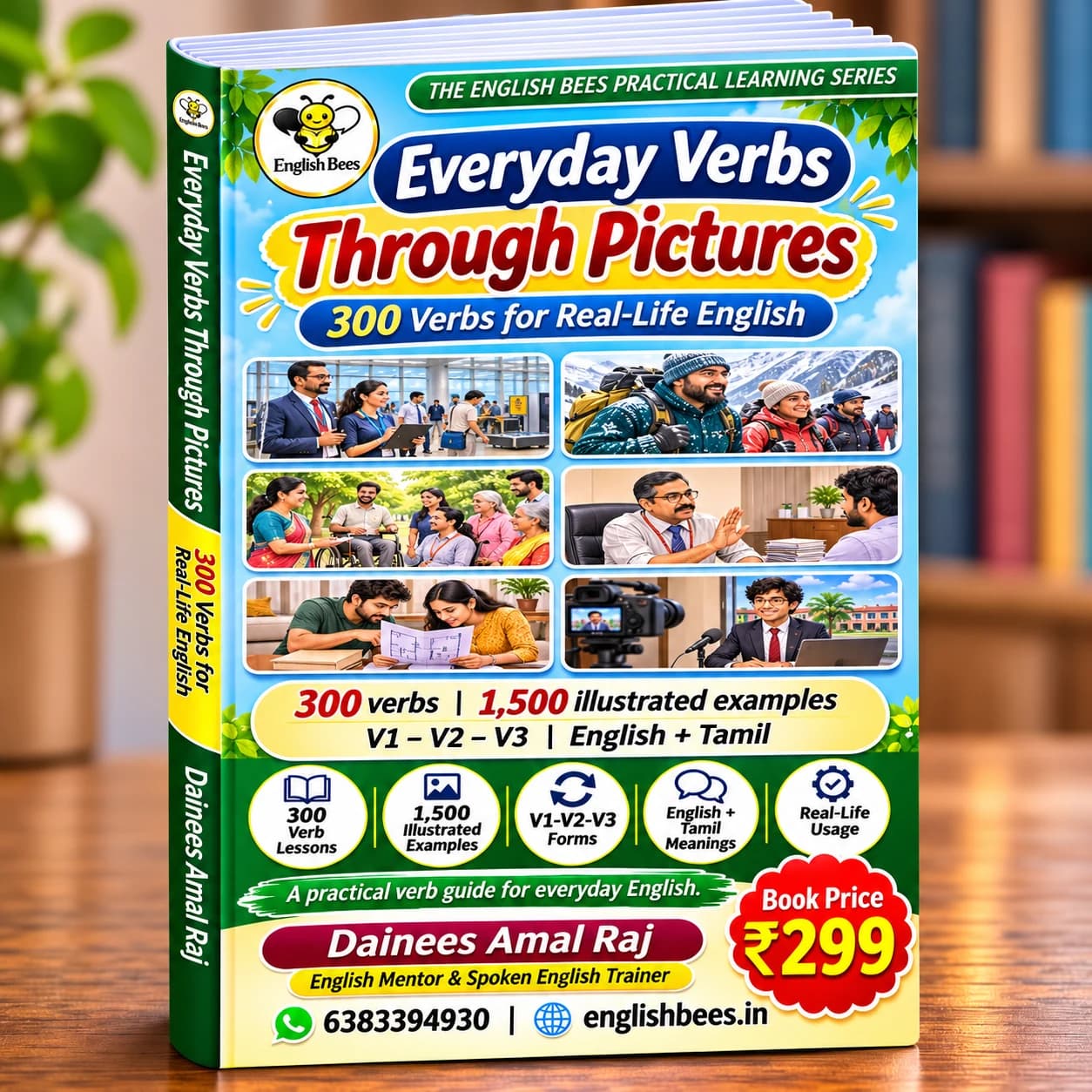
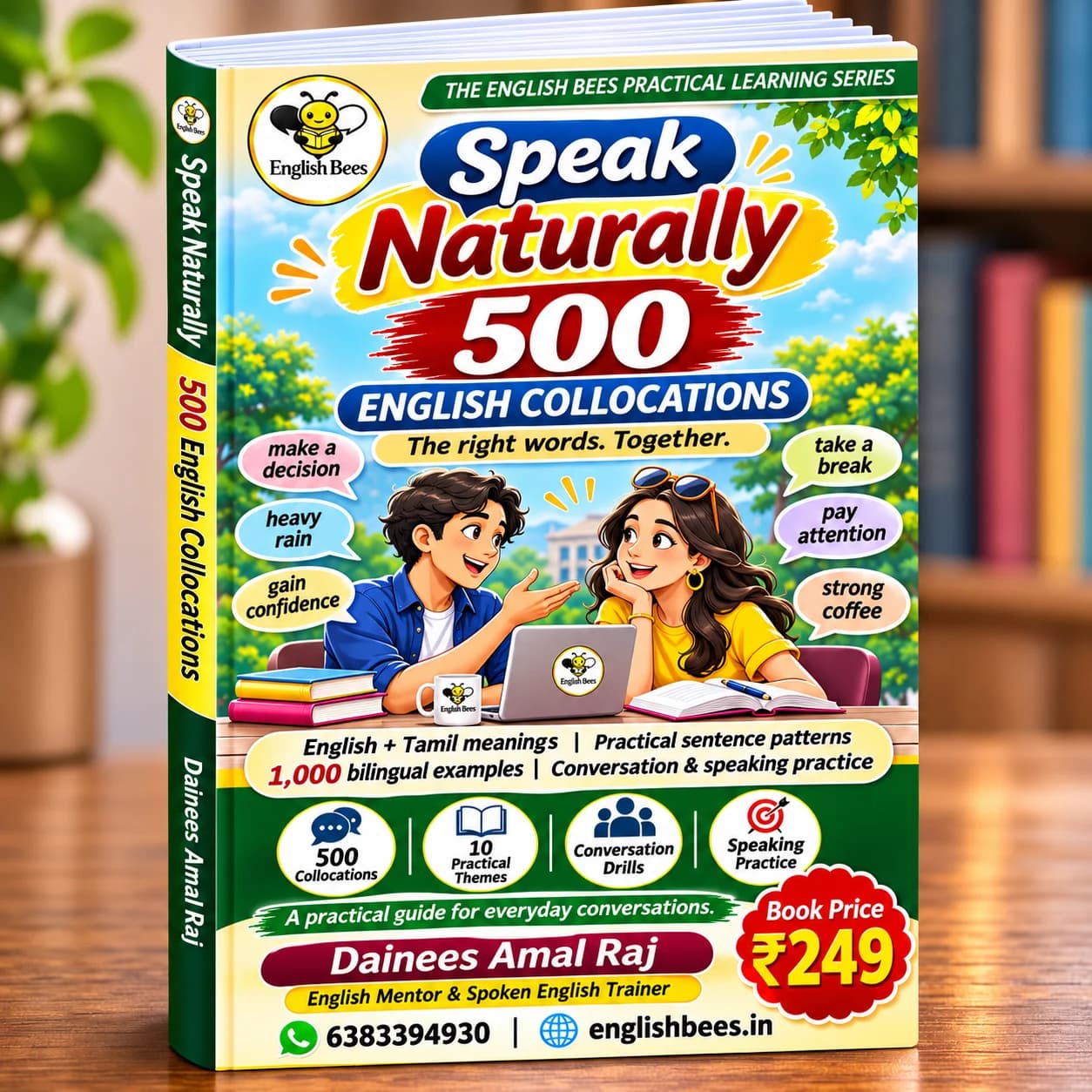
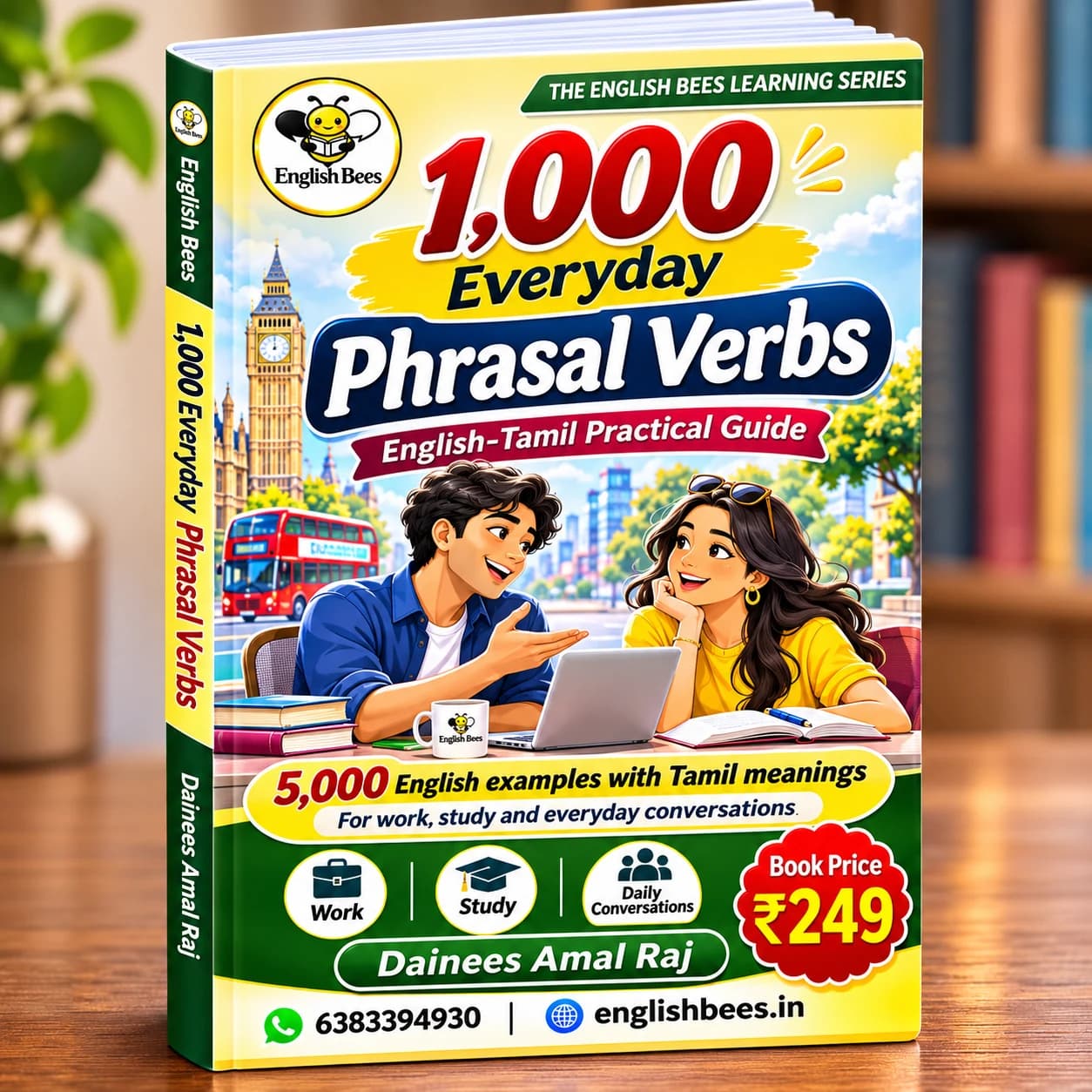
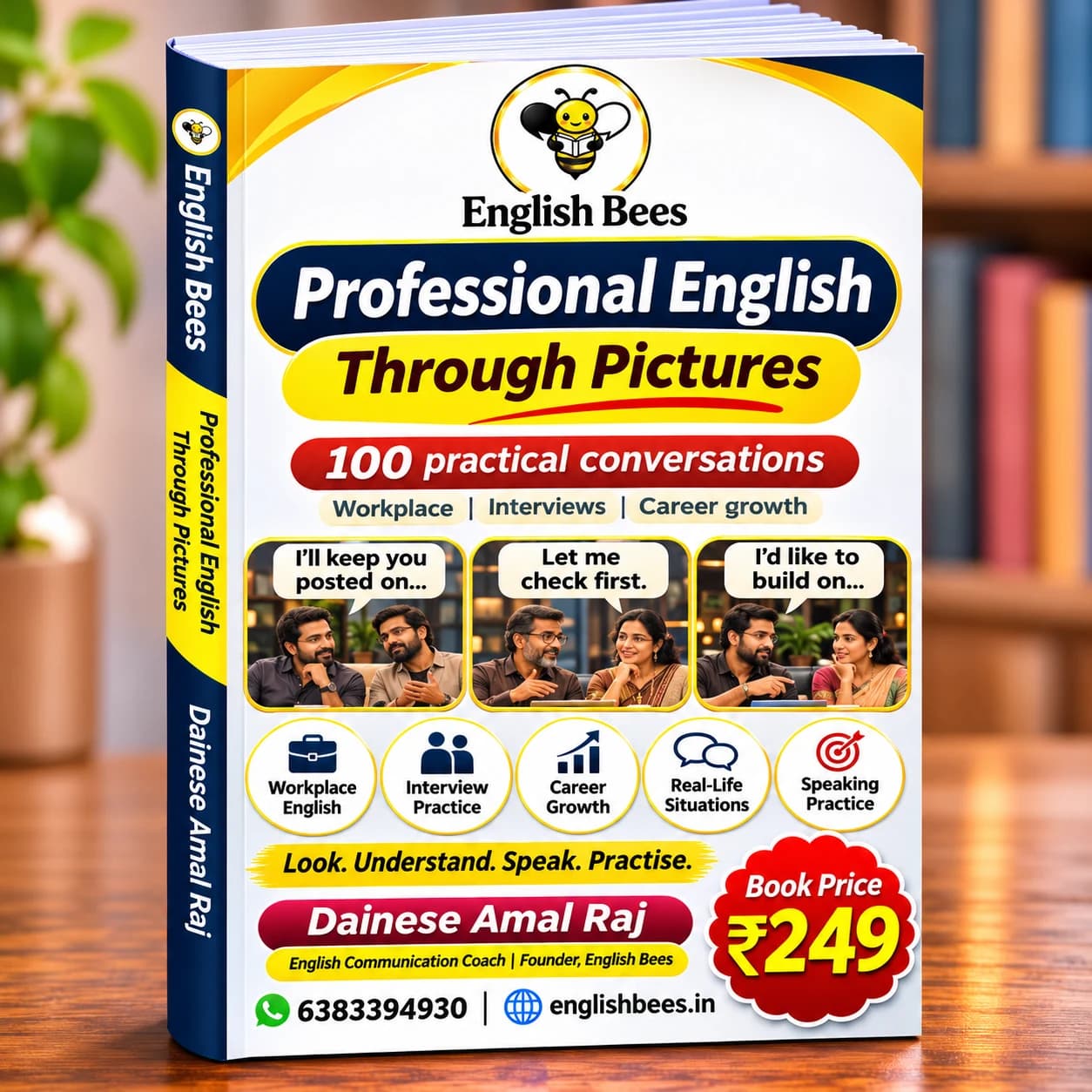
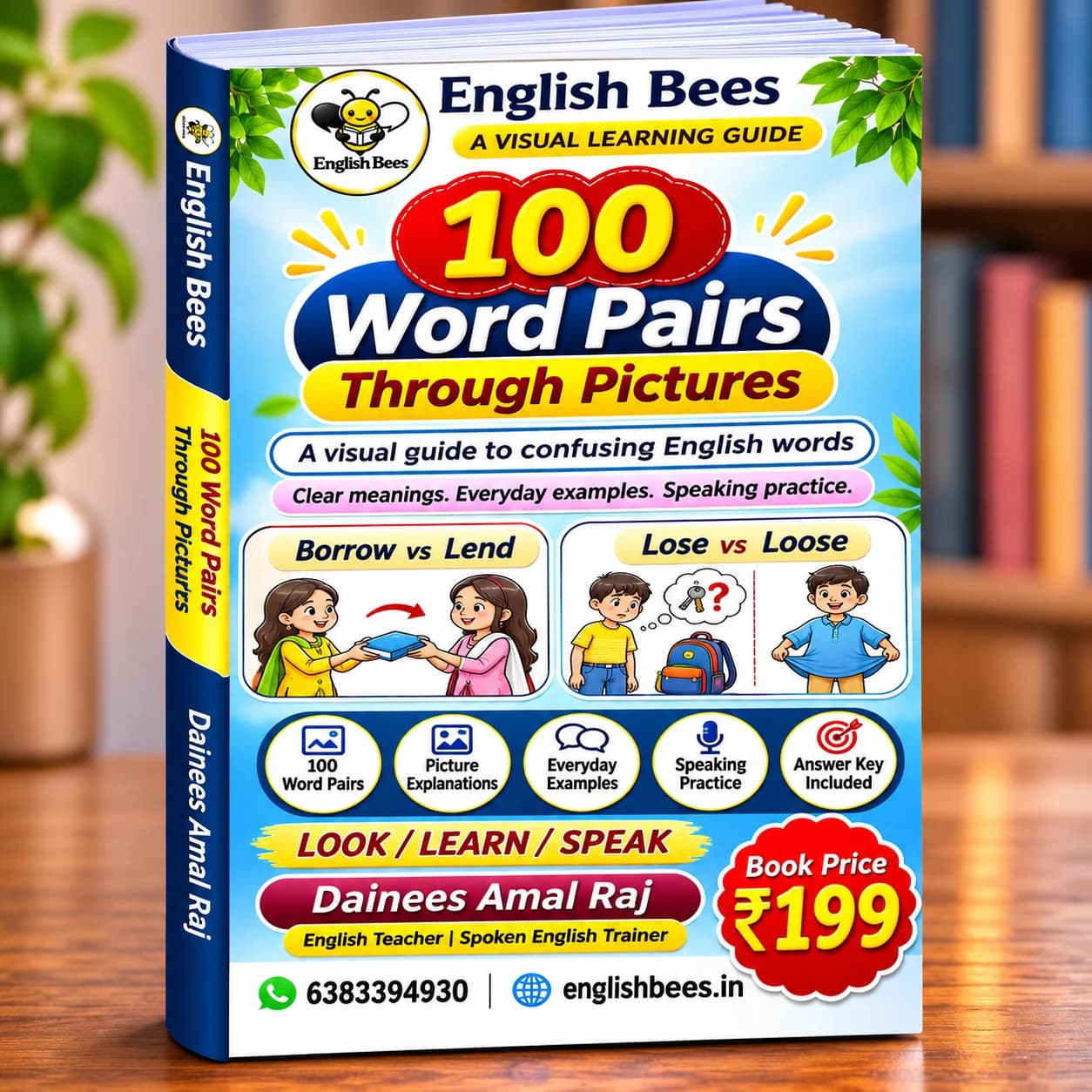
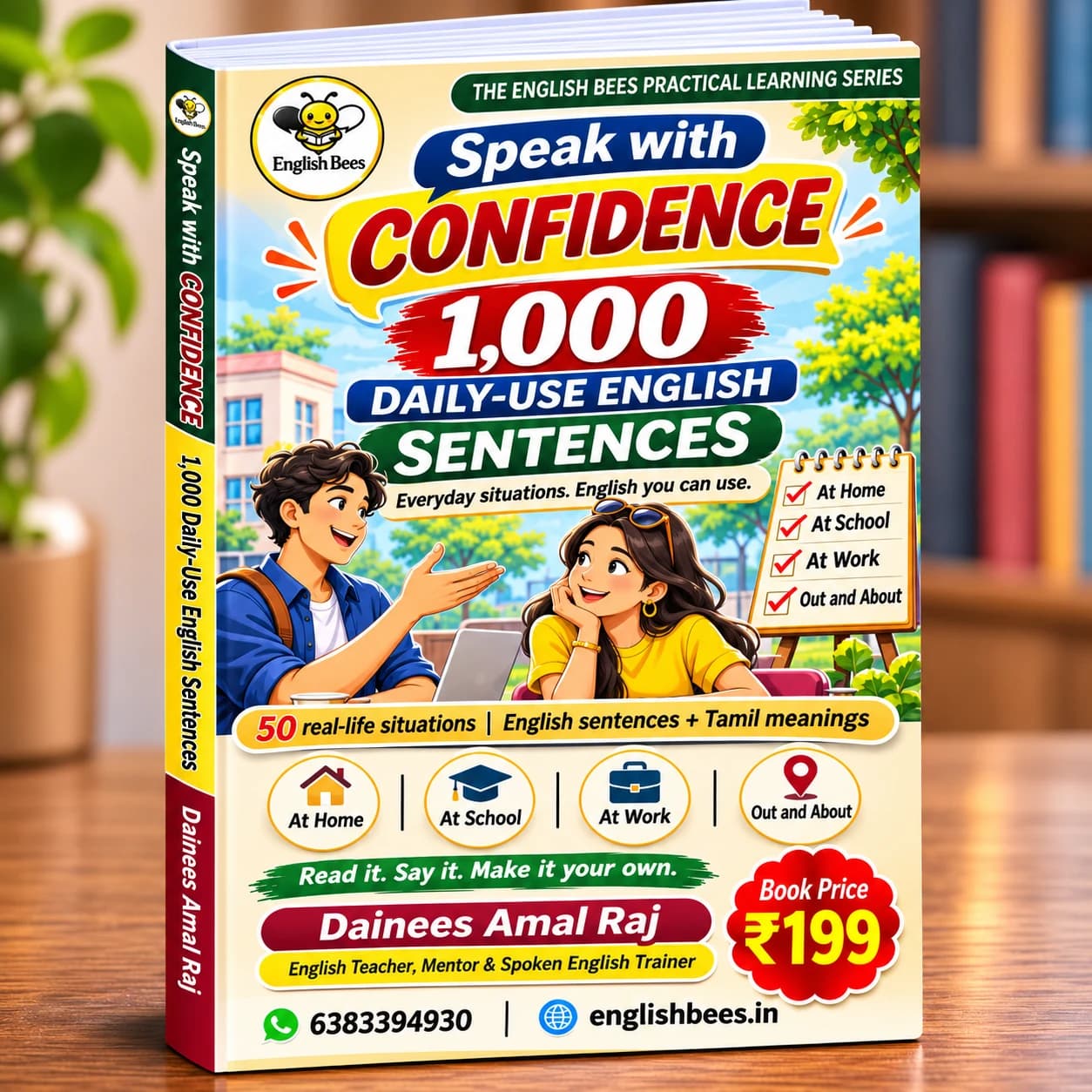
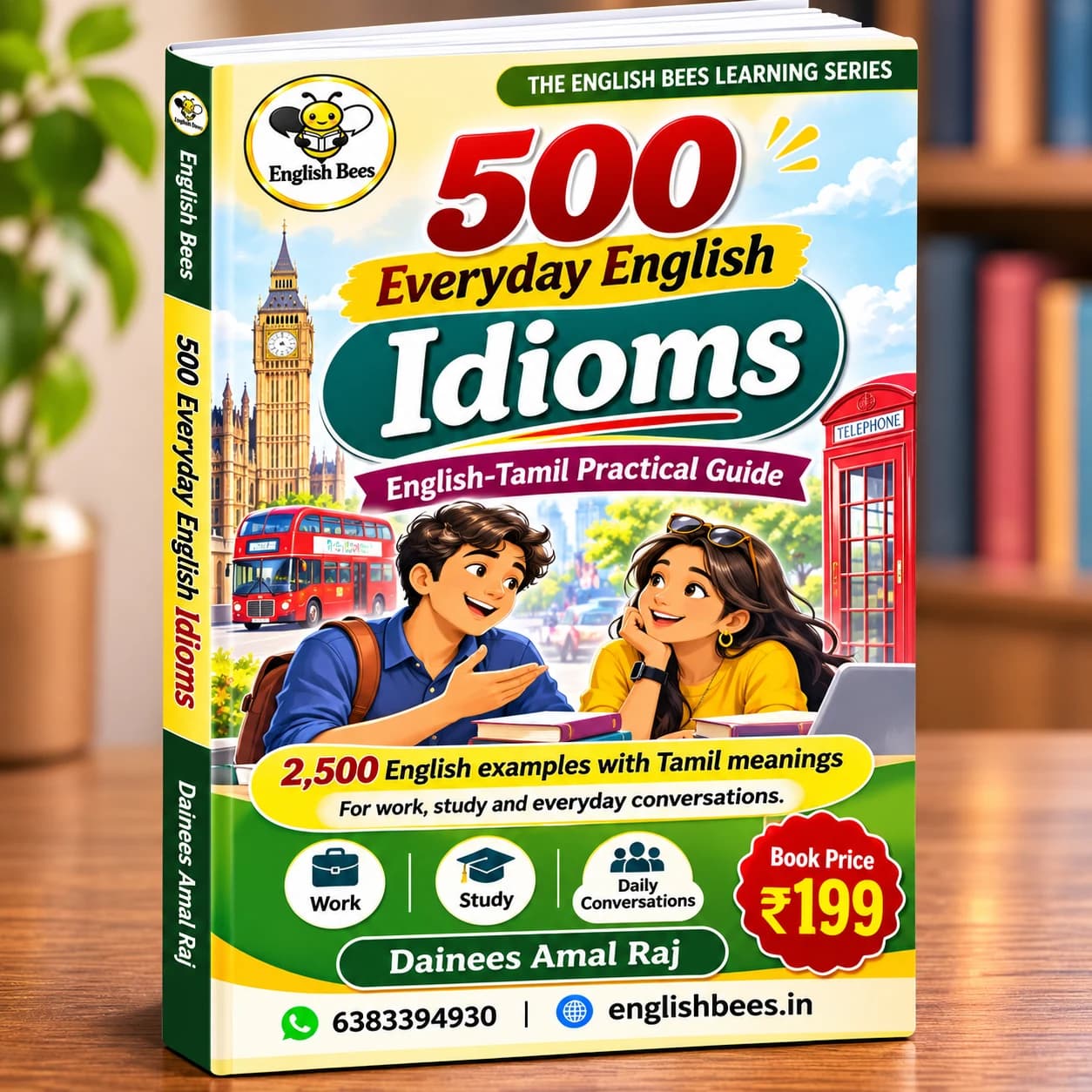
PDF books with Complete
Choose your course
Both courses run on your phone, in simple English, at your own pace. Pay once and learn for as long as you need.
- Best value100+ videos
Spoken English Complete
A full spoken English course with 100+ video lessons for real conversations at home, work, business and study.
₹5,999Was ₹7,000Save ₹1,001
one-time, full access
- 100+ video lessonsReal-life conversations for home, work, business and study: shopping, phone calls, customers, school, travel and more
- A quiz after every lessonCheck yourself as you go, and finish with the 100-question final quiz
- All 10 PDF books free1,243 pages with Tamil meanings, worth ₹2,190
- Gold coins, streaks and badgesClimb the weekly leaderboard as you learn
Total value₹9,190
You pay₹5,999
Spoken English Foundation
30+ topics and videos, with simple notes and a quiz each. Finish with a 100-question final quiz.
₹2,999
one-time, full access
- 30+ topics and videos, each with notes
- A short quiz after every topic
- 100-question final quiz
- XP, streaks and badges as you go
Want the extra video lessons and the PDF books too? Spoken English Complete has everything in this course and more.

Compare the courses
| Feature | Foundation₹2,999 | Complete₹5,999 |
|---|---|---|
| Topics and videos with notes and a quiz | 30+ | 100+ |
| Real-life video lessons | Not included | Included |
| 100-question final quiz | Included | Included |
| All 10 PDF books (worth ₹2,190) | Not included | Free |
| Gold coins, streaks, badges and leaderboard | Included | Included |
| Help on WhatsApp | Included | Included |
Spoken English Complete includes everything in Spoken English Foundation.
See the pricesWhat you will learn
30+ topics and videos, one a day
Am / Is / Are
Use the helping verbs am, is and are to talk about who you are and how you feel, and to make positive, negative and question sentences.
Simple Present Tense
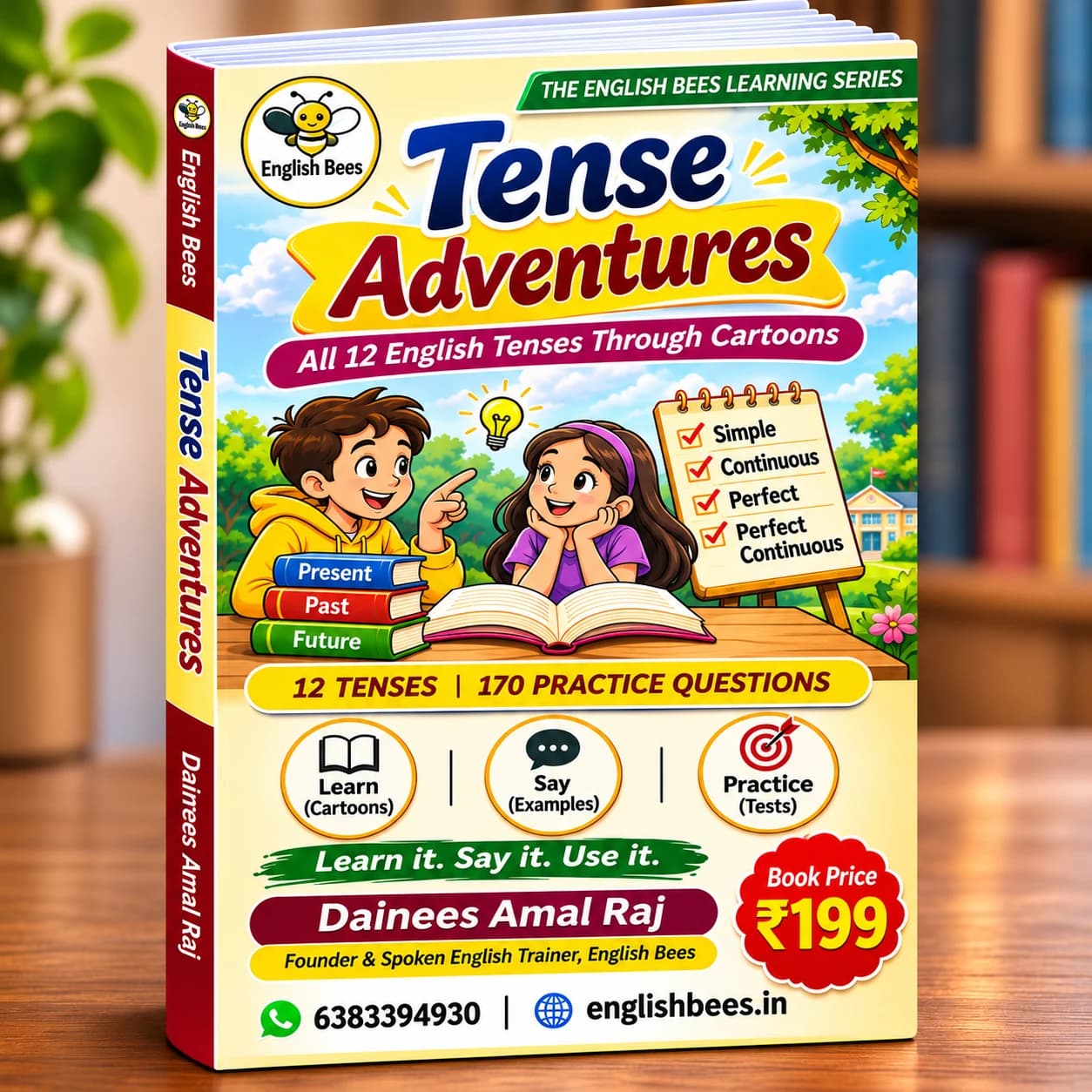
Use the simple present tense to talk about daily habits, routines and general truths, and to make positive, negative and question sentences with the correct verb form.
Simple Past Tense
Use the simple past tense to talk about finished actions and past events, with regular (-ed) and irregular verbs, and make negatives and questions using did.
Simple Future Tense
Use will and shall to talk about future actions, decisions, promises and predictions, and make positive, negative and question sentences.
Present Continuous Tense
Use the present continuous tense (am / is / are + verb-ing) to talk about actions happening now and temporary activities, and make positive, negative and question sentences.
Past Continuous Tense
Use was and were with verb-ing to talk about actions that were happening at a time in the past, and to make positive, negative and question sentences.
Show all topicsShow fewer topics
Future Continuous Tense
Use will be and shall be with verb-ing to talk about actions that will be in progress at a time in the future.
Present Perfect Tense
Use has and have with the past participle to talk about past actions that are connected to the present, and to make positive, negative and question sentences.
Past Perfect Tense
Use had with the past participle to talk about an action that was completed before another action in the past, and to make positive, negative and question sentences.
Present Perfect Continuous Tense
Use has been / have been + verb-ing to talk about actions that started in the past and are still continuing now, and emphasise how long with for and since.
For / Since / Ago
Use for, since and ago correctly to say how long, from when and how long back an action happened.
Active & Passive Voice (Level 1)
Change simple present sentences from active to passive voice using am, is or are with the past participle, and shift the subject and object correctly.
Active & Passive Voice (Level 2)
Change active sentences to passive across the simple past, simple future and present continuous, form 'by whom' questions, and know when to drop 'by + subject'.
Reported Speech (Statements and Imperatives)
Report what someone said without quotation marks, changing pronouns and tense for statements, and using 'to + verb' with told, asked, advised and warned for orders, requests and advice.
Reported Speech (WH-Questions and Yes/No Questions)
Report both yes/no questions using if or whether and WH-questions keeping the question word, by changing the question into statement order, dropping do/does/did and the question mark, and shifting the tense.
Modal Verbs
Use the modal verbs can, could, may, might, must, should and have to to express ability, permission, possibility, advice, necessity and obligation, always followed by the base verb.
Either / Neither / Both
Talk about two people or things using both to include the two together, either to pick one of the two, and neither to reject both, with the correct verb agreement and the pairs either...or and neither...nor.
WH-Questions
Ask for information using WH-words like what, who, whose, which, when, where, why and how, including how many, how much, how long and how often.
All Types of Yes / No Questions
Form questions that can be answered with yes or no across all tenses by moving the helping verb to the front, using be-verbs, do / does / did, modals and perfect forms.
Pronouns (All Types)
Use subject, object, possessive, reflexive and emphatic pronouns correctly so you can speak smoothly and avoid repeating nouns.
This / That / These / Those
Point to people and things correctly with the demonstratives this, that, these and those, matching near or far and singular or plural.
Indefinite Pronouns and Adverbs
Use indefinite words like somebody, anything, everywhere and nobody to talk about people, things and places in a general way, with the correct singular verb and no double negatives.
Quantifiers
Use quantifiers like all, most, some, any, much, many, a little and a few to talk about quantity, choosing the right word for countable and uncountable nouns.
Degrees of Comparison
Use the positive, comparative and superlative forms of adjectives to compare people, places and things, including irregular adjectives like good, bad and much.
Adverbs (Real-Life Usage)
Use adverbs of manner, time, place, frequency and degree to add how, when, where, how often and how much to your sentences, and tell an adverb apart from an adjective.
Enough & Too
Use 'enough' and 'too' correctly to talk about quantity and degree, place them in the right position, and tell the difference between having what you need and having more than you can handle.
Before / After / During / While / Always / Usually / Often
Connect actions to time with before, after, during and while, and describe how often you do things with the frequency adverbs always, usually and often.
Prepositions (Level 1 & Level 2)
Use basic prepositions like in, on, at, to and from for place, time and direction, and move to advanced ones like under, over, between, among, into, out of and through for fluent, natural English.
Prepositional Phrases (Level 1 & Level 2)
Build prepositional phrases that start with a preposition and end with a noun, using them to add detail about place, time, direction, reason and condition in natural spoken English.
Conjunctions
Join words, phrases and sentences smoothly using coordinating, subordinating and correlative conjunctions so your speech sounds natural and connected.
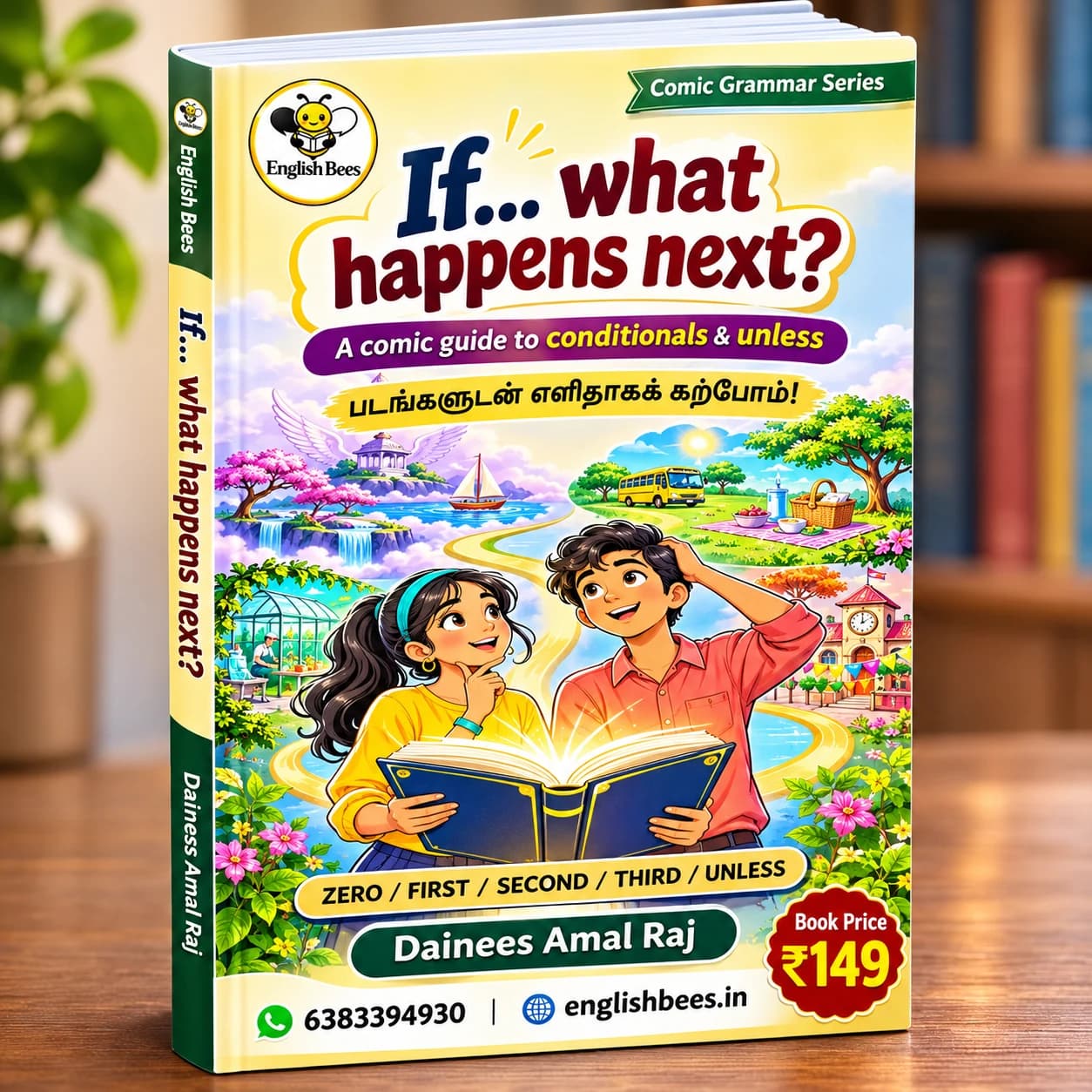
If Clause (Conditional Sentences)
Talk about conditions and their results using the zero, first, second and third conditionals, plus common spoken forms like 'unless'.
Relative Clauses
Add extra information about people, places, things and times using relative words like who, whom, whose, which, that, where and when.
Spoken English Complete has 100+ real-life video lessons
Shopping, phone calls, customers, school and travel. Watch them in order; each one opens the next.
How the quizzes work
- Each topic quiz has 10 to 30 questions, from easy to hard, one minute each.
- Pass with 70% to open the next topic. You can try again any time.
- The final quiz has 100 questions from every topic.
Not sure which one?
Message us on WhatsApp. Tell us what you need English for, at home, at work, for your business or for studies, and we will suggest the right course.
Ask on WhatsApp